

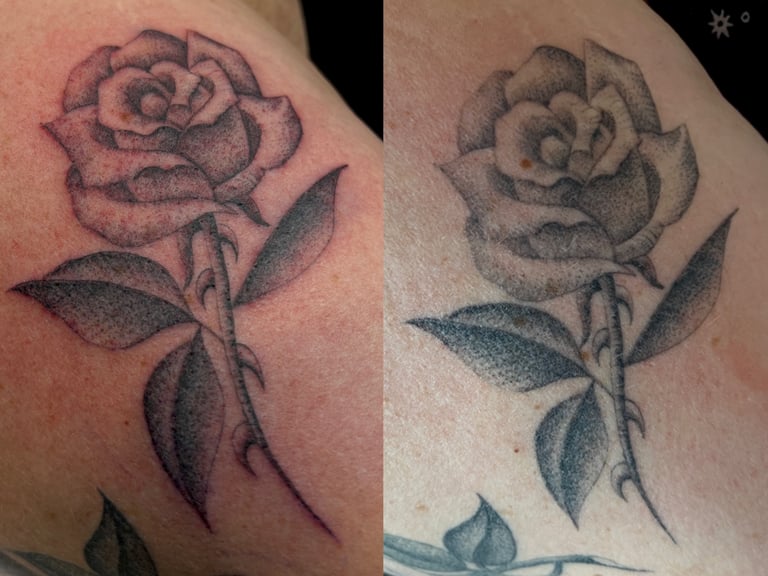
Discover the complete transformation journey of black and grey tattoos from fresh ink to fully healed masterpiece, and learn what changes are normal along the way.
The Fresh Ink Stage: What Your New Black and Grey Tattoo Looks Like
Walking out of the studio with your fresh black and grey tattoo is an exciting moment. Your new ink looks bold, vibrant, and incredibly crisp—especially if you've chosen fineline work or intricate stippling details. The blacks appear deep and saturated, the grey washes look smooth and dimensional, and every line is sharp and defined. This is your tattoo at its most dramatic stage, and it's completely normal to feel amazed by how striking it looks.
At this point, your tattoo is essentially an open wound. The skin will be red, slightly swollen, and tender to the touch. You'll notice the area is covered with a protective barrier—whether that's a traditional bandage, plastic wrap, or a modern second-skin adhesive like Saniderm. This is protecting your fresh ink from bacteria, friction, and environmental contaminants during those critical first hours.
Here in Portland, our climate can actually work in your favor during this stage. The moderate humidity helps prevent excessive drying, but you'll still need to be mindful of keeping your tattoo clean and protected. For those of you getting fineline black and grey work, this initial appearance is particularly stunning because the contrast is at its peak—but don't worry when things start to shift as healing progresses. That's exactly what we're going to walk through together.
Week by Week: The Healing Timeline You Need to Know
Days 1-3 are all about managing the initial inflammation and keeping everything clean. Your tattoo will feel warm, look shiny from the plasma and excess ink, and might ooze slightly. This is your body's natural response to the tattooing process. If you're using a second-skin bandage, you can leave it on for 3-5 days as directed. If you're doing traditional aftercare, you'll gently wash the tattoo 2-3 times daily with unscented soap and apply a thin layer of appropriate moisturizer. The key word here is thin—over-moisturizing is one of the most common mistakes I see, especially with delicate fineline work.
Days 4-7 bring the peeling stage, which can be a bit alarming if you're not prepared. Your tattoo will start to flake like a sunburn, and you might see pieces of skin with ink attached coming off. This is completely normal and expected. Your black and grey tattoo might look dull, cloudy, or even patchy during this phase. Resist the urge to pick or scratch—I know it's tempting when it gets itchy, but picking can pull out ink and damage those fine details you invested in. For stippling work especially, patience during this week is crucial to maintaining the integrity of all those tiny dots.
Weeks 2-4 mark the settling phase. The surface has healed, but deeper layers of skin are still regenerating. Your tattoo might look slightly faded or have a 'milky' appearance—this is called the 'onion skin' effect and it's temporary. The blacks won't look as dark, and the subtle grey gradations might seem less defined. This is the stage where a lot of clients in Portland reach out asking if something went wrong. I promise you, this is normal. Your skin is essentially rebuilding itself over the tattoo.
By weeks 4-6, you're reaching full healing. The milky layer has shed, and you're seeing your tattoo as it will truly look long-term. The blacks have settled into a rich, deep tone, and the grey washes have found their final value. Fineline details that seemed to disappear are back, and stippling patterns have revealed their full texture. This is when you can really appreciate how the tattoo has integrated with your skin rather than sitting on top of it.
Why Your Tattoo Looks Different After Healing
The most common question I hear from clients is, 'Why doesn't my tattoo look as dark as it did on day one?' The answer lies in understanding that your tattoo ink sits in the dermis, the second layer of your skin. When fresh, you're looking at that ink through a thin, inflamed layer of epidermis. Once healed, you're viewing it through a fully regenerated, thicker layer of skin cells—essentially a natural filter that softens the appearance slightly.
Black and grey tattoos typically settle at about 20-30% lighter than they appear fresh, which is why experienced artists like myself actually tattoo slightly darker than the final desired result. This is especially important for fineline and stippling work, where subtle tonal variations make all the difference. Those delicate grey washes need to be built with this healing process in mind, or they'll fade to almost nothing.
Your skin type, placement, and lifestyle also play significant roles in how your tattoo heals and looks long-term. Areas with more sun exposure will naturally fade faster over time. Skin that's naturally drier might show slightly more fading than well-moisturized skin. This is why aftercare doesn't stop at six weeks—maintaining your tattoo is an ongoing commitment. For my Portland clients, our typically overcast weather is actually a blessing for tattoo longevity, but you still need sunscreen during those summer months when the sun makes an appearance.
The texture of healed skin also changes how light interacts with your tattoo. Fresh tattoos have a certain sheen from inflammation and healing ointments. Healed tattoos have a matte finish that's more integrated with your natural skin texture. This is actually what makes a well-executed black and grey piece look so organic and timeless—it becomes part of you rather than something applied to you.
Common Healing Concerns and What's Actually Normal
Let's talk about what freaks people out but is actually totally fine. Scabbing happens, especially if you have a larger piece or areas with heavy saturation. Light scabbing is normal—thick, raised scabs might indicate over-working or too much moisture. If you're seeing thick scabs, reach out to your artist, but don't panic. Just keep the area clean and let them fall off naturally.
Itching is probably the most universally annoying part of healing. Usually hitting around days 5-7, it can be intense. Your fineline black and grey tattoo might feel like it's crawling under your skin. This means healing is happening. Instead of scratching, try gently slapping the area or applying a cold compress. Keep up with your light moisturizing routine—sometimes itching intensifies when skin gets too dry.
Uneven fading or patchiness during weeks 2-3 makes people nervous, but it's almost always temporary. Different areas of your tattoo might heal at different rates depending on how the needle depth varied, how your skin accepted the ink, and the natural contours of your body. Those delicate stippling areas might look spotty before they settle. Give it the full 6 weeks before making any judgments about whether you need a touch-up.
Blowouts and actual problems are rare when you work with an experienced artist, but it's worth knowing the difference between normal healing and something that needs attention. If you see red streaks extending from the tattoo, experience fever, notice green or yellow discharge, or feel intense pain beyond normal soreness, contact your artist or a healthcare provider. These signs indicate infection, which is uncommon but needs immediate attention. In my years working in Portland, I've seen very few infections when clients follow proper aftercare—our clean water and moderate climate actually help with this.
Caring for Your Black and Grey Tattoo to Preserve Its Beauty
The first six weeks are critical, but long-term care determines how your tattoo looks years from now. Sunscreen is your tattoo's best friend—UV exposure is the number one cause of fading in black and grey work. Those beautiful subtle gradations and fine lines will blur and lighten significantly with sun damage. I recommend SPF 50+ on any exposed tattoos whenever you're outside for extended periods. Yes, even in Portland's cloudy weather, because UV rays penetrate clouds.
Moisturizing should become part of your daily routine. Well-hydrated skin keeps your tattoo looking crisp and vibrant. You don't need anything fancy—unscented lotion applied once or twice daily is perfect. This is especially important for fineline work, where dry, flaky skin can make those delicate lines look fuzzy or broken. Think of it like maintaining any other investment—a little consistent care goes a long way.
Lifestyle factors matter more than people realize. Staying hydrated keeps your skin healthy from the inside out. If you're a swimmer, rinse chlorine off promptly and moisturize afterward. If you work outdoors or in harsh conditions, protect your tattoo with clothing when possible. For my Portland clients who love hiking and outdoor activities, consider UV-protective clothing for tattooed areas during long days on the trails.
Touch-ups are a normal part of tattoo maintenance, especially for highly detailed black and grey work. Even with perfect aftercare, some areas might need a refresh after a few years. Fineline tattoos and stippling work are particularly prone to needing minor touch-ups because of how delicate they are. Most reputable artists (myself included) offer complimentary touch-ups within the first year if you've followed aftercare instructions. After that, periodic touch-ups every few years can keep your piece looking fresh and intentional.
Finally, choose your artist wisely from the start. Black and grey work, especially fineline and stippling techniques, require specific skills and experience. An artist who understands how ink settles, how to compensate for healing, and how to work with different skin types will give you a tattoo that heals beautifully and ages gracefully. Here in Portland, we're fortunate to have a strong tattoo community with high standards. Do your research, look at healed photos (not just fresh work), and don't be afraid to ask questions about an artist's experience with the specific style you want. Your tattoo is permanent—taking time to find the right artist is worth it.